What is the Early Intervention Program for Children? And at what age does a child need an early intervention program?
Early Intervention Program is a specialized program that supports children in treating delayed growth and difficulties that children face in academic achievement and general behavioral problems.
The program is suitable for premature children up to 3 years old in order to improve their motor, behavioral and social skills.
Before we review the details of the early intervention program, we will present the most important symptoms of delayed growth in children, which are delayed social, physical and mental skills due to low levels of growth hormone.
Diagnosis of delayed growth from a medical perspective
A thorough examination of the child with the necessary tests and x-rays reveals:
The importance of early detection in cases of delayed development or speech
At Therapy Stages Center we believe in the importance of early intervention
So, if you notice any delay in your child’s development or in his pronunciation of any words in the early stages of age and up to 3 years or his lack of response to any of the daily tasks or his way of expressing himself, don’t hesitate to contact us.
Difficulties in interacting with adults or other children:
This includes children who find it difficult to interact effectively with adults or their peers.
This may be evident in the context of social interactions and relationships.
Therefore, if parents are concerned about their children’s development and their child is facing this challenge, we encourage them to inquire in advance about early intervention programs to support and enhance their children’s development.
Our doctors have come together at our early intervention program for children
At Therapy stages center, we have a group of specialized doctors, gathered to support the early intervention program for children:
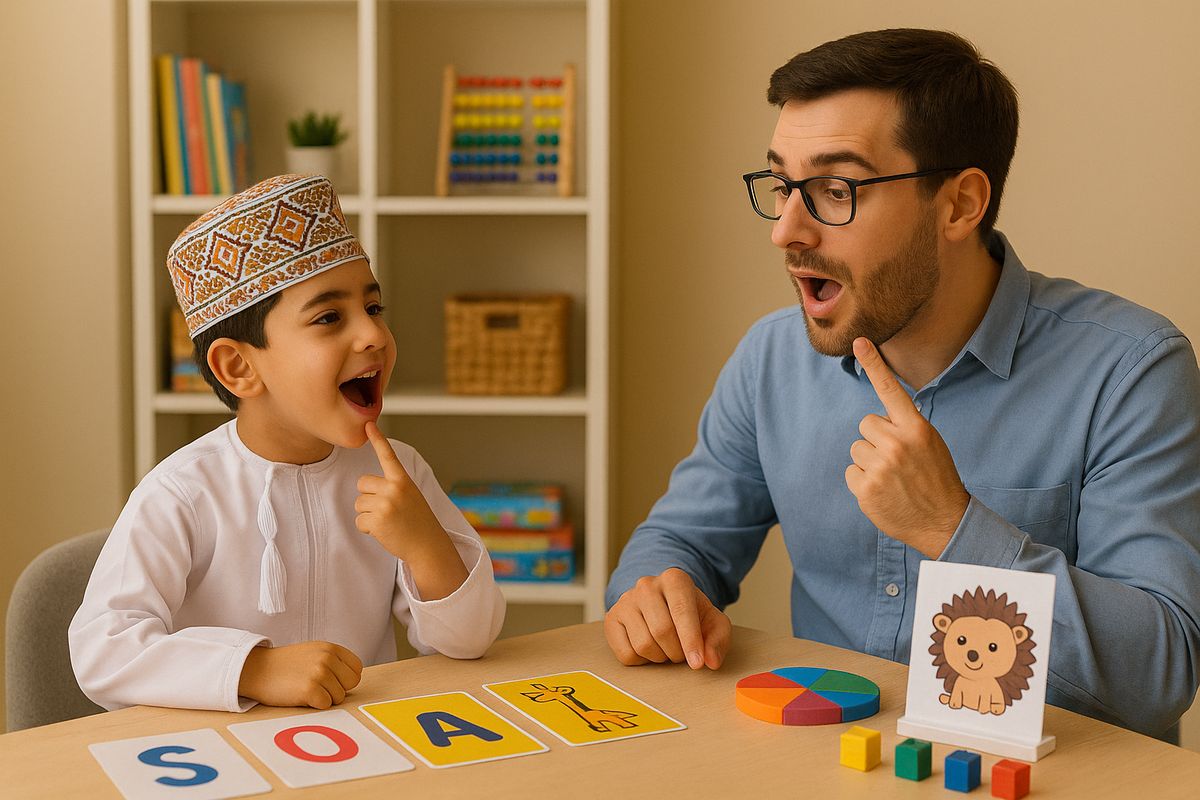
Speech and language specialists
Audiologists
Physical therapists
Nutritionists
Our Early Intervention Plan for Children
The child is initially subjected to an evaluation in terms of tests and observations, and this evaluation determines the degree of benefit from the program and how the program is presented to each child.
The early intervention program for children provides the correct guidance methods for parents and how to support the child in developing their skills.
Customizing a special program for each child and understanding the child’s individual differences.
Comprehensive understanding of the child’s condition in terms of his general health, growth rate, diet, and linguistic, motor, and sensory development.
Using games in learning and cognition.
Continuous follow-up and evaluation of the child’s condition and measuring the success of the early intervention program in developing the child’s skills.
Autism, developmental delay and the difficulties a child faces in his journey with autism
من أهم العلامات الملحوظة و المشتركة بين التوحد وتأخر النمو
Socially
Reciprocal social relationships
Behavior:
Lack of expression and showing feelings
Lack of interaction with others
Linguistically
May be late in speaking compared to his peers
Repeats some words or phrases
Behavioral
Creates his own world of fixed routine
Constantly moving
Extremely sensitive to light and touch
Finders difficulty expressing himself in front of others
Other diseases that negatively affect the child's growth and development of skills
Autism SpectrumIt is important to understand autism spectrum and that the child’s difference from his peers may negatively affect the development of his skills
Malnutrition
Chronic diseases such as kidney disease, diabetes and cystic fibrosis
Anemia
Endocrine problems
Cerebral palsy
Attention deficit hyperactivity disorder
Muscular dystrophy
How does early intervention help children develop?
The early intervention program for children helps develop:
The child’s physical skillsCrawling – sitting – walking – holding things with his hands – seeing and hearing
Communication skills: all ways of expressing himself and what he wants to talk about – hearing – understanding – gestures
يساهم العلاج الطبيعي بأنواعه المختلفة تحسين التأخر الحركي عند الأطفال من خلال بعض التمارين مع مراعاة مراحل تطوره وهل هي مناسبة لعمره أم لا ومناسبة لحالته الصحية إذا كان لديه ضعف في العضلات أو بعض من المشاكل الحركية الأخرى