Role of physical therapy in the treatment of Down syndrome
Down syndrome is one of the most common genetic disorders, as children with it are vulnerable to delayed development and growth in addition to many health and educational challenges.
In this article, we review with you more information about the syndrome and how physical therapy contributes to its treatment..
Down syndrome is a genetic disorder that occurs as a result of an abnormal repetition of chromosome 21. This disorder is also called trisomy 21, as people with this syndrome have three copies of chromosome 21 instead of two copies as in normal people.
Down syndrome is characterized by a set of physical and mental characteristics that include:
Physical developmental delay
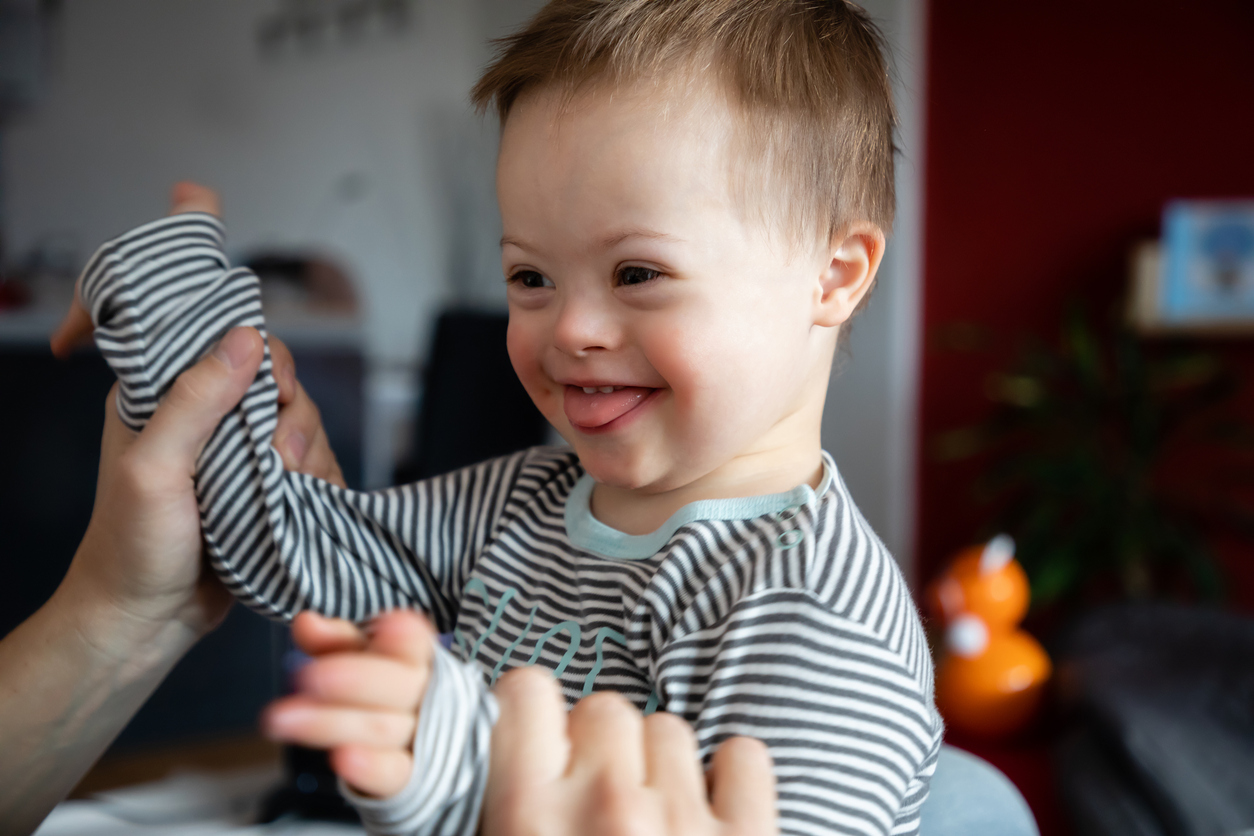
Children with Down syndrome are usually shorter in stature and have distinctive physical features such as a round face, slanted eyes, and small, low-set ears.
Mental retardation
People with Down syndrome usually have varying degrees of mental retardation. They often have limited learning abilities and need additional support in education and personal development.
Associated health problems
People with Down syndrome can develop a range of associated health problems such as heart, digestive, hearing, and vision problems.
Reduced motor skills
People with Down syndrome may have reduced motor skills which affects their ability to move around.
Second: How does physical therapy help in treating Down syndrome?
Physiotherapy plays an important role in improving the quality of life of children with Down syndrome, as they may have difficulty with balance and coordination due to muscle weakness and low muscle tone. Physiotherapy works to strengthen these muscles and improve motor coordination, by going through the following steps:
Improving muscle strength
Physical therapy programs are designed to enhance muscle strength in children with Down syndrome, which helps them improve their motor skills and perform daily activities better.
Improving balance and coordination
Exercises and techniques are included to improve balance and motor coordination, which helps children improve their ability to walk and move safely.
Improving functional movement
Physical therapy aims to improve functional movement and reduce the restrictions faced by children with Down syndrome, which helps them perform their daily activities more independently.
Providing support and guidance to parents
Physical therapy provides support and guidance to parents of children with Down syndrome, by guiding them about exercises and techniques that can be applied at home to enhance the improvement of children’s motor abilities.
Contact us now
If you are looking for specialized support and care for your child with Down syndrome, do not hesitate to contact us.
Through a careful assessment of the condition, we will meet all your child’s needs and help him improve his quality of life.